
Last update: 03.03.2026
| Curso | Vacancies |
|---|
| Curso | Vacancies |
|---|
| Course | Vacancies |
|---|
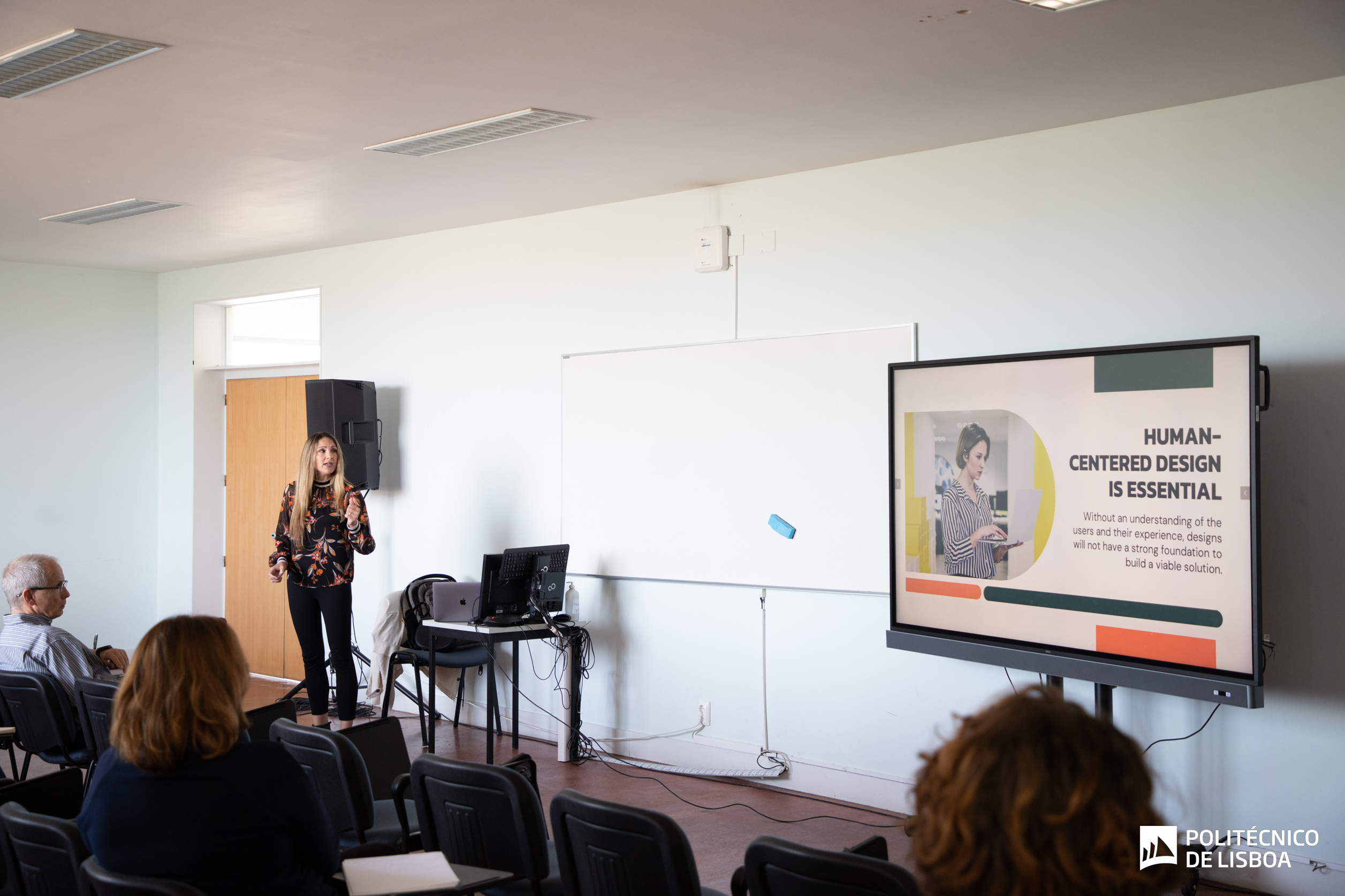
The workshop directed at the docens of the Higher School of Social Communication, aimed to give to know strategies to pro
In 2014, Polytechnic University of Lisbon created the Occupational Health Service (SSO-IPL) in close coordination with ESTeSL. In addition to complying with the legislation in force on the health and safety of Polytechnic University of Lisbon workers, SSO-IPL also provides occupational health services to other institutions that make use of Polytechnic University of Lisbon’s services.
The mission of the Social Action Services of Polytechnic University of Lisbon is to support students through scholarships and other forms of assistance, helping to create the conditions for academic success. As part of its work, SAS provides support through scholarships, accommodation, food services, and cultural and sports activities, among other areas, with a focus on student well-being.
Internationalization, as a way to integrate the intercultural dimension in teaching, research, and services of the institution, is a strategic pillar of development at Polytechnic University of Lisbon.
Polytechnic University of Lisbon offers a range of services, support networks and programmes for students, as well as infrastructures that support learning. Together, these aim to promote equal opportunities in access to higher education and academic success, while respecting individual differences and encouraging inclusion.
For Polytechnic University of Lisbon, entrepreneurship is part of its educational mission and a way of supporting the economy. As such, the institution has a long tradition of working with businesses and society to respond to new challenges in the fields of Arts, Education, Business Sciences, Communication, Engineering and Health Sciences.
In response to current demands and trends, Polytechnic University of Lisbon invests in distance learning opportunities based on active teaching methods, supported by resources and structures that encourage the development of digital and multimedia technologies. This approach helps train teachers and students in strategic areas of knowledge that are important for the country’s scientific, economic, social and cultural development.